As Washington’s 1:1 net-metering structure approaches a major turning point, homeowners who wait may lose access to today’s strongest solar economics.
Why Waiting Could Cost Homeowners More
For years, Washington homeowners have had access to one of the most valuable solar savings structures available: 1:1 net metering.
Under this structure, a properly sized solar system can help offset much of a home’s annual electricity use. When the system produces more power than the home needs in the moment, that excess electricity is sent back to the grid and credited at full retail value. Those credits can then help offset electricity used later, including evenings, overnight hours, winter months, and other lower-production periods.
That is what makes net-zero electricity possible for many Washington solar homeowners. In practical terms, a well-designed system can significantly reduce the electric bill and, in some cases, leave little to pay beyond the utility’s basic monthly connection fee.
- 1:1 net metering gives homeowners full retail credit for excess solar power sent back to the grid under today’s stronger structure.
- A properly sized system can offset much of a home’s annual electricity use by applying solar credits from stronger production months to periods when the home needs more utility power.
- For some homeowners, this can make net-zero electricity possible, meaning the system produces enough over the year to offset most or all of the home’s electricity usage.
- The result can be a dramatically lower electric bill, sometimes leaving little more than the utility’s basic monthly connection fee.
- Homeowners who act before rules change may have a stronger opportunity to secure today’s 1:1 credit structure, depending on utility timelines and program requirements.
- Those who wait may lose access to one of Washington’s most valuable solar savings opportunities if future credit structures become less favorable.
- With utility rates rising, today’s solar credits become even more valuable, because every kilowatt-hour produced at home is electricity the homeowner does not have to buy later at higher utility rates.
Once Changes Are Announced, There May Not Be Much Time to Act
Local utilities are already approaching or exceeding Washington’s net-metering threshold. Once a utility announces changes to its 1:1 solar credit program, homeowners may rush to install before the new rules take effect.
That is where the bottleneck begins.
A solar project cannot be completed overnight. It requires a home evaluation, system design, permitting, equipment scheduling, installation, inspection, and utility approval. If demand spikes after a rule change is announced, Washington installers could face months-long backlogs, and homeowners who wait may not be able to complete their projects in time.
That is why the best time to evaluate solar is before an announcement creates urgency across the market. Homeowners who act early have a stronger chance of securing today’s 1:1 net-metering structure before the rules become less favorable.
California Already Showed What Can Happen
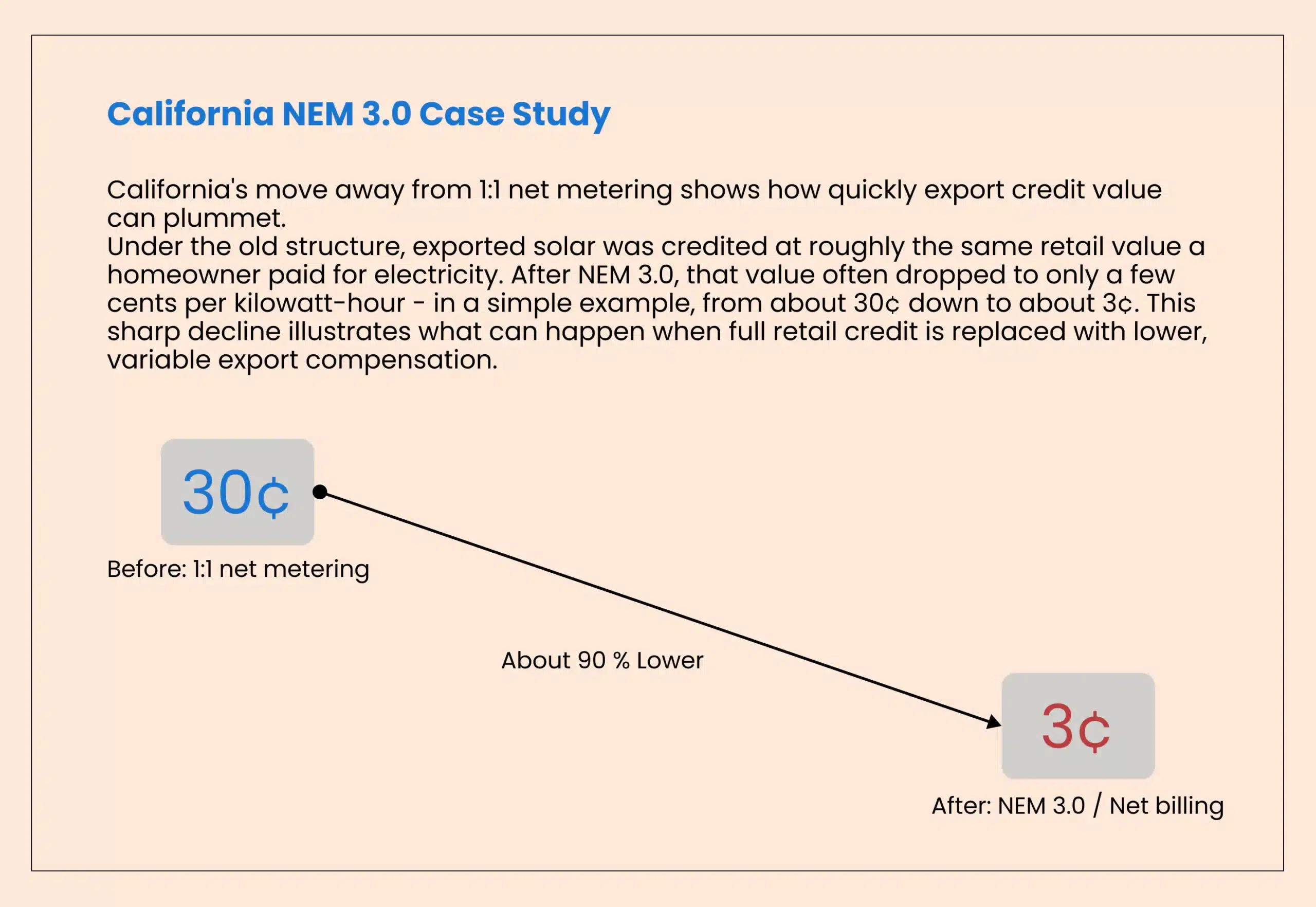
Washington homeowners do not need to look far to understand the risk of waiting. California already went through a major solar credit change. Homeowners rushed to install before the new rules took effect, solar companies became overloaded, and many people who waited too long missed the opportunity to be grandfathered into the earlier net-metering structure.
Washington is not California, but the lesson still matters: when homeowners realize a valuable solar credit structure may be ending, demand can rise quickly.
The risk is not only the policy change itself. The risk is waiting until everyone else is trying to act at the same time. Homeowners who start early have a better chance of securing today’s stronger solar credits before timelines become crowded and the rules become less favorable.
Rising Utility Rates Make the Decision More Urgent
The possible loss of 1:1 net metering is happening at the same time electricity rates are rising sharply across the Puget Sound region. For years, higher electric bills may have felt like a manageable part of homeownership. But today’s rate increases are becoming larger, more frequent, and more costly over time.
Recent and proposed Puget Sound Energy rate increases show how quickly utility costs can compound. As electricity becomes more expensive, every kilowatt-hour a homeowner produces with solar becomes more valuable because it is power they do not have to buy from the utility at rising rates.
That is why timing matters. Homeowners who wait may face two financial pressures at once: higher utility rates and less favorable credit for exported solar power. Together, those changes could make the same solar decision more expensive and potentially less valuable in the future.
Acting now gives homeowners the opportunity to evaluate solar while today’s stronger credit structure may still be available and before additional rate increases further raise the cost of staying fully dependent on the grid.
Solar Works Exceptionally Well in Washington
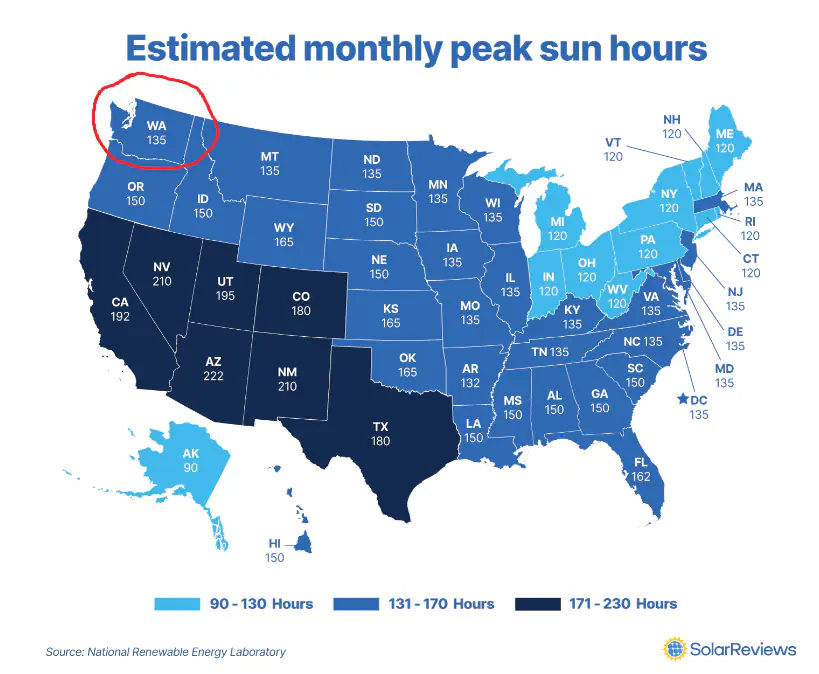
One of the biggest misconceptions about solar in Washington is that it only works well in hot, sunny climates. In reality, solar performance is not determined by heat or perfect blue-sky days alone. In the Pacific Northwest, strong production comes from a combination of longer summer daylight, cooler operating temperatures, ambient light, reflected light, and smart system design.
- Cooler temperatures help solar panels operate more efficiently than they often do in high-heat regions.
- Longer summer days create meaningful seasonal production and utility credits.
- Ambient and reflected light can increase total energy capture throughout the year.
- Rising utility rates make every kilowatt-hour your system produces more valuable over time.
- Well-designed systems deliver consistent performance — not just peak output.
When a system is designed properly for Washington conditions, solar can deliver strong long-term value even in a cloudy, variable climate. This becomes even more important as utility rates rise and solar credit rules potentially become less favorable.
Why Bifacial Solar Matters in the Pacific Northwest
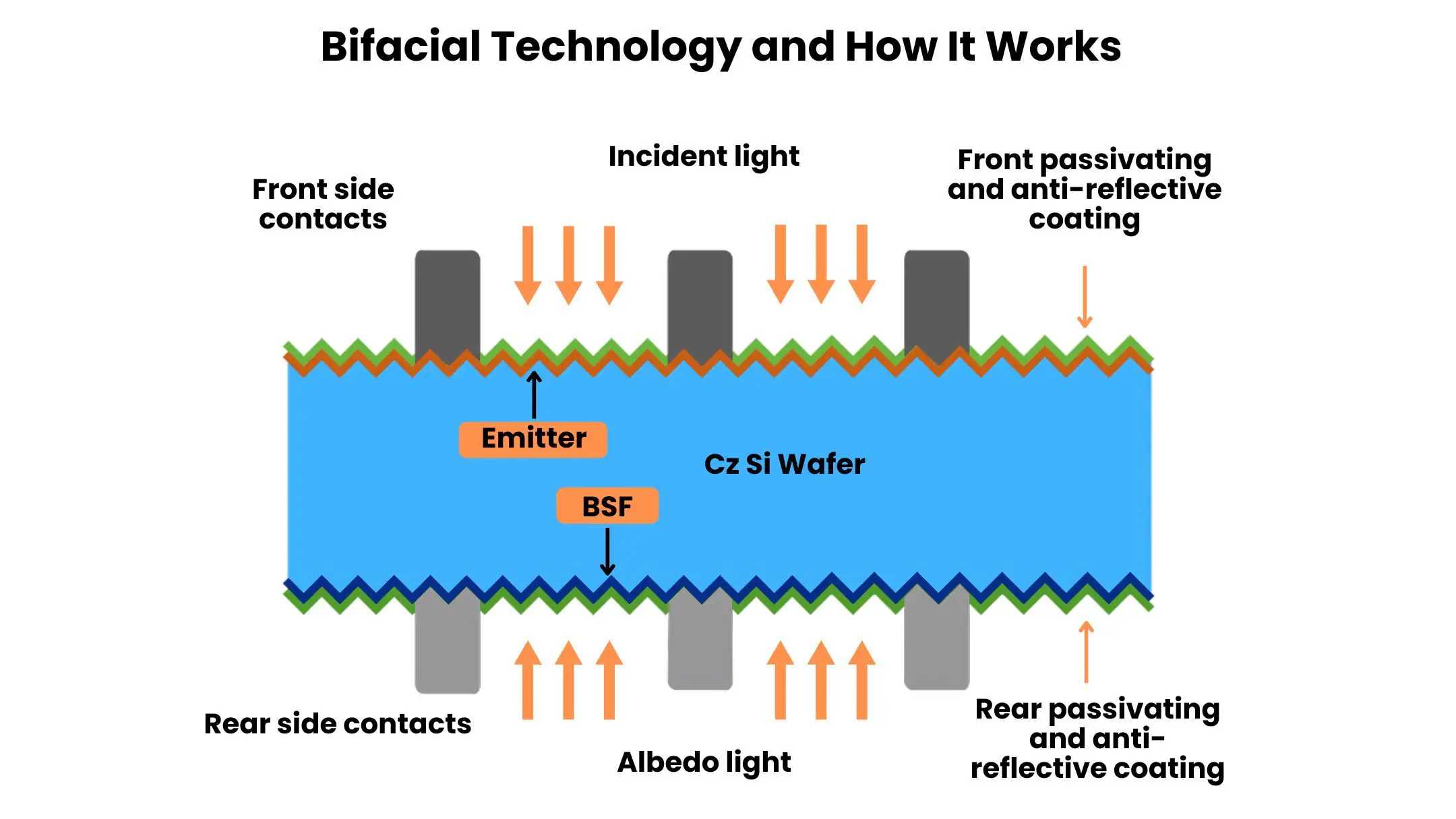
Solar in the Pacific Northwest is not just about direct sunlight. It is about capturing the light that is available throughout the day, including ambient light, reflected light, and lower-angle seasonal sun. That is one reason bifacial solar panels can be especially well-suited to Washington homes.
Bifacial panels produce energy from both the front and rear sides of the panel. This allows them to capture light from above as well as reflected light from rooftops, clouds, and surrounding surfaces. In cloudy, variable, and low-angle light conditions, that added capture can help improve total production from each panel.
For homeowners, the point is simple. The equipment and design strategy should match the region. A Pacific Northwest solar system should be built around local light conditions, seasonal production patterns, roof characteristics, and utility credit rules. That is how homeowners protect long-term value in a market where every kilowatt-hour is becoming more important.
Waiting Could Mean Less Value for the Same Solar Decision
Many homeowners assume they can wait a year or two and make the same solar decision later. That may not be true.
If utility credit rules change, a homeowner could install similar equipment in the future but receive less value for the power sent back to the grid. At the same time, rising utility rates are making home-produced electricity more valuable because every kilowatt-hour generated onsite is power the homeowner does not have to buy at higher future rates.
Homeowners who act before the rules change may have a better opportunity to secure today’s stronger credit structure, reduce reliance on rising utility power, and benefit from decades of solar production under more favorable economics.
Washington Homeowners Still Have Time
The window has not closed, but it is changing. Utilities are approaching or exceeding net-metering thresholds, electricity rates are rising, and awareness is growing.
For Washington homeowners already considering solar, now is the time to get clear answers — not to be pressured into a decision, but to understand what their home can produce, how today’s credit structure affects the value of that production, and what rising utility rates could mean over the life of the system.
The more important question is whether waiting could mean losing access to the same solar economics available today. Understanding the numbers now can help homeowners make a more informed decision before utility rules and rates change further.
Sources & Further Reading
- Washington State Legislature — Chapter 80.60 RCW: Net Metering of Electricity
https://app.leg.wa.gov/RCW/default.aspx?cite=80.60&full=true - Washington State Department of Commerce — Net Energy Metering
https://www.commerce.wa.gov/energy-policy/electricity-policy/nem/ - Washington State University Energy Program — Net Metering Dashboard / Utility Threshold Tracking
https://www.energy.wsu.edu/RenewableEnergy/NetMetering.aspx - Puget Sound Energy — Customer Connected Solar FAQ
https://www.pse.com/en/green-options/Renewable-Energy-Programs/customer-connected-solar/Customer-Connected-Solar-FAQ - Seattle City Light — Solar Power / Net Metering Update
https://www.seattle.gov/city-light/residential-services/home-energy-solutions/solar-power