Living in the beautiful Pacific Northwest means designing energy systems around local weather, terrain, trees, and utility conditions. Our homes face winter storms, tall evergreens, saturated soil, extended gray weather, and utility infrastructure that varies widely from one neighborhood to the next. For homeowners already considering backup power, the question is not simply whether a battery, solar array, or generator can provide added resilience. The more important question is how those pieces should work together.
A strong backup strategy in the Puget Sound area requires more than choosing solar panels, adding a battery, or installing a generator as separate components. The value comes from matching the equipment to the home’s loads, the homeowner’s priorities, and the outage conditions we see across the greater Puget Sound area. Solar, battery storage, load management, generator integration, electrical panels, and the home’s energy demands all need to be considered together.
This guide is intended to give Western Washington homeowners a practical way to think about that planning process. Before comparing battery sizes or equipment packages, it helps to understand the design decisions that shape performance, runtime, daily usability, and long-term energy savings.
What the Battery Is Being Asked to Carry
Before battery capacity can be recommended responsibly, the installer needs to understand what the system is expected to support. A few lights, the refrigerator, internet, and selected outlets place a very different demand on a backup system than a heat pump, well pump, EV charger, electric water heater, or induction range.
Those larger loads are not automatically off the table. They simply need to be planned for carefully. Otherwise, a homeowner may believe they are getting one level of backup and experience something different when the power goes out.
Learn the fundamentals here: battery backup basics
Whole-home backup may be worth considering when the home or property depends on more electrical systems than a typical urban or suburban home. In Western Washington, that is often the case for rural homes, small farms, coastal properties, and homes closer to the Cascade foothills, where outages may last longer and utility restoration can be more complicated.
Partial Backup: Powering What Matters Most
For many homes in the Puget Sound area, partial backup is the most practical way to approach battery storage. Instead of trying to keep every circuit in the house running, the system is designed around the parts of the home the homeowner most wants available during an outage.
That usually means the essentials: refrigeration, lighting, internet, furnace controls, garage doors, sump pumps, medical equipment, or selected outlets for daily use. The goal is not to make the home operate exactly as it does when the grid is on. The goal is to keep the home safe, functional, and comfortable while utility power is out.
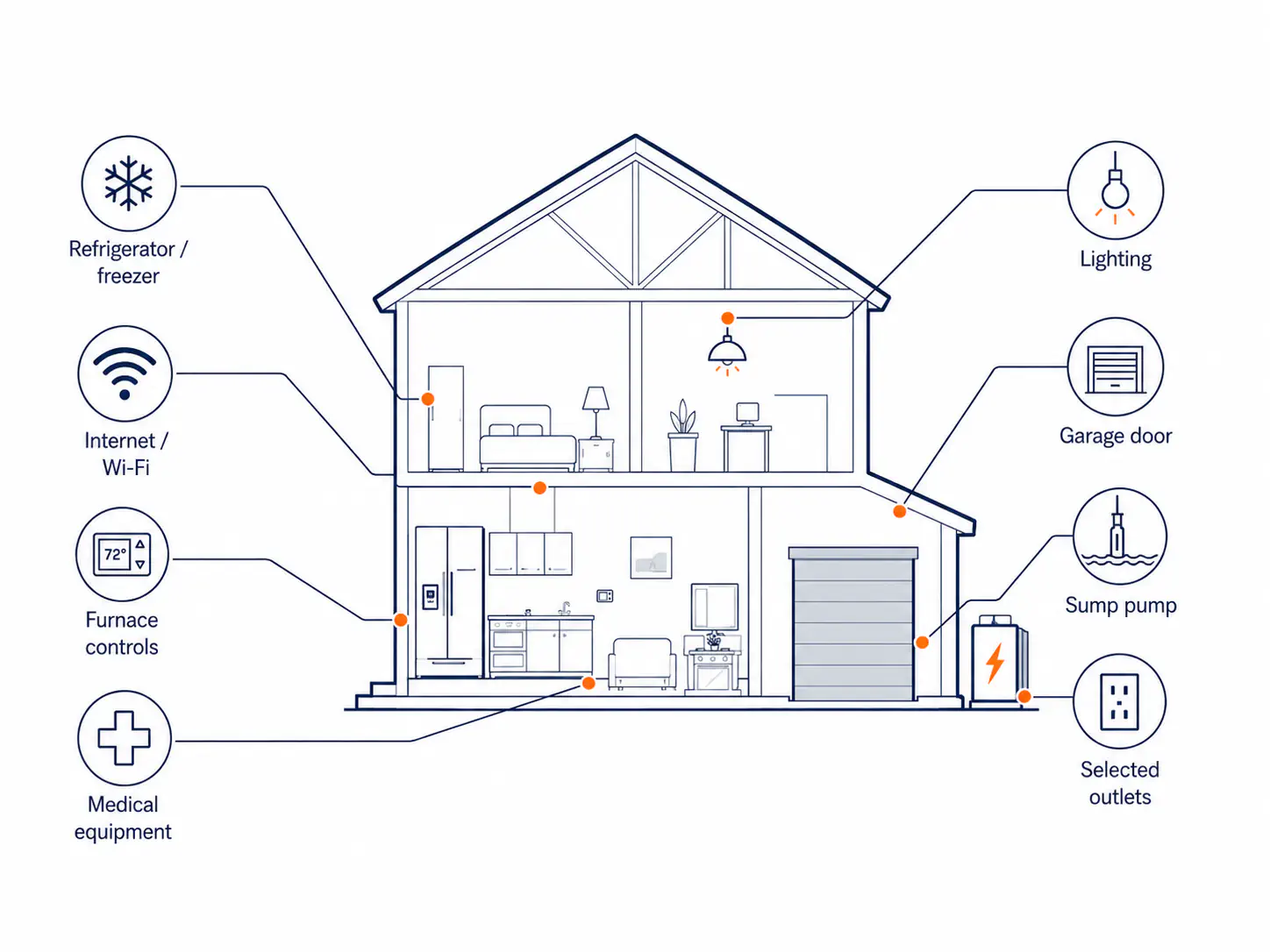
This can be especially valuable in Western Washington, where many outages happen during winter storms. Shorter days, heavy cloud cover, and extended gray weather can limit how much solar energy is available to recharge a battery during an outage. In those conditions, it often makes sense to be intentional about which loads receive backup power.
A partial-backup design can offer several advantages:
- Lower project cost: Backing up selected circuits can reduce the amount of battery storage, electrical work, and system complexity required.
- Longer runtime: Stored energy is focused on the loads the homeowner needs, helping the system last longer during an outage.
- Clear expectations: The homeowner knows which parts of the home will stay powered and which larger loads are outside the backup plan.
- Smarter use of stored energy: The system is not trying to support every appliance, outlet, or high-demand load in the house.
During storm season, a focused backup plan can make battery storage more useful when solar production is limited.
For many homeowners, partial backup provides the right balance of reliability, runtime, and cost. It keeps the most important parts of the home powered during an outage without requiring the system to support every load in the house.
Whole-Home Backup: When the Property Calls for More Coverage

Whole-home backup may be worth considering when the home or property depends on more electrical systems than a typical urban or suburban home. In Western Washington, that is often the case for rural homes, small farms, coastal properties, and homes closer to the Cascade foothills, where outages may last longer and utility restoration can be more complicated.
For these homeowners, the backup plan may need to account for more than lights, refrigeration, and internet. A rural property may rely on a well pump for water, septic equipment, freezers, security gates, barn or shop circuits, or systems tied to animals and property care. A coastal or foothill home may be more exposed to wind, trees, snow, saturated soil, or harder-to-access utility infrastructure.
Before choosing whole-home backup, it helps to look carefully at:
- Water and septic needs: Well pumps, pressure pumps, and septic systems may be essential to keeping the property functional.
- Heating and comfort: Heat pumps, furnace controls, and larger HVAC equipment need to be evaluated before they are included in the backup plan.
- Food storage: Extra refrigerators and freezers can be important for rural homes, farms, or households that keep larger food supplies.
- Animal or property care: Barn circuits, pumps, gates, lighting, and outbuilding power may need to be included.
- Weather exposure: Coastal, wooded, or foothill properties may face longer or more frequent outage conditions.
- System complexity: More coverage usually means more design work, more equipment coordination, and a higher project cost.
Whole-home backup can be a strong choice when the home or property truly needs broader coverage. The important step is identifying those needs before equipment is selected.
Start With the Loads
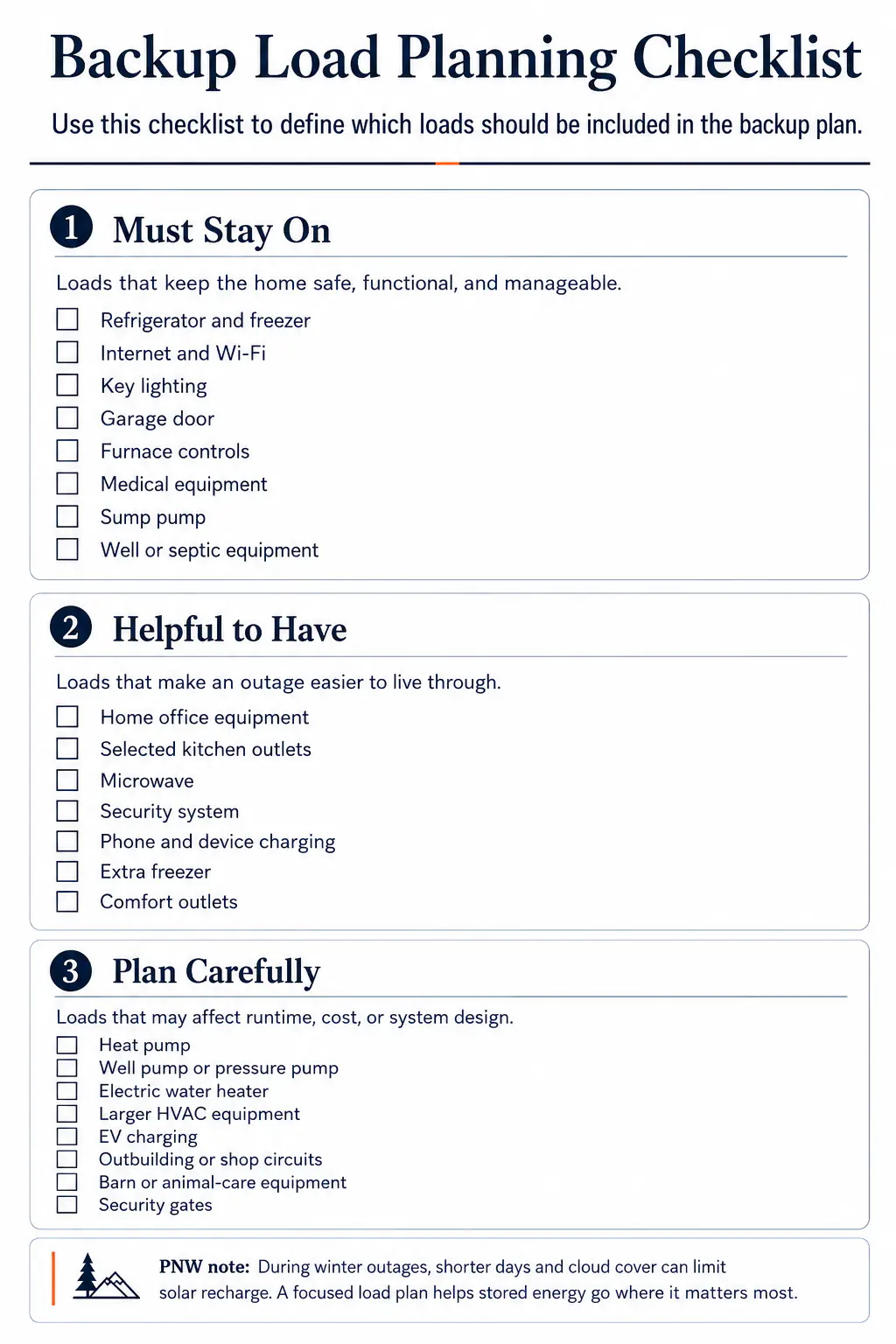
Before equipment is selected, define the loads the system is expected to carry. This step gives the design real direction: what must stay on, what would be useful, and what should be managed carefully because it may affect runtime, cost, or system complexity.
For Puget Sound and Western Washington homes, this matters most during winter outages, when solar recharge may be limited and stored energy needs to be used deliberately. Use the checklist below to identify the loads that belong in your backup plan before battery capacity, smart load controls, or generator integration are finalized.
Explore design thinking here: battery backup system design strategies
Do You Need Smart Load Control?
Once the loads are identified, the next question is whether a fixed protected-load panel is enough, or whether the home would benefit from smart load control.
Not every battery backup system needs smart load control. For some homes, a protected-load panel with a clear set of essential circuits may be the better choice. If the goal is to keep refrigeration, internet, key lights, furnace controls, and a few outlets running, a simpler partial-backup design may provide exactly what the homeowner needs.
Smart load control becomes more useful when the backup plan includes larger or more variable loads. That may include a heat pump, well pump, electric water heater, EV charging, shop circuits, barn circuits, security gates, or other equipment that should not necessarily run all at once.
The comparison below shows why a fixed protected-load panel and a smart load system can perform differently during longer or more demanding outages.
Compare approaches: smart load systems vs. standard backup panels
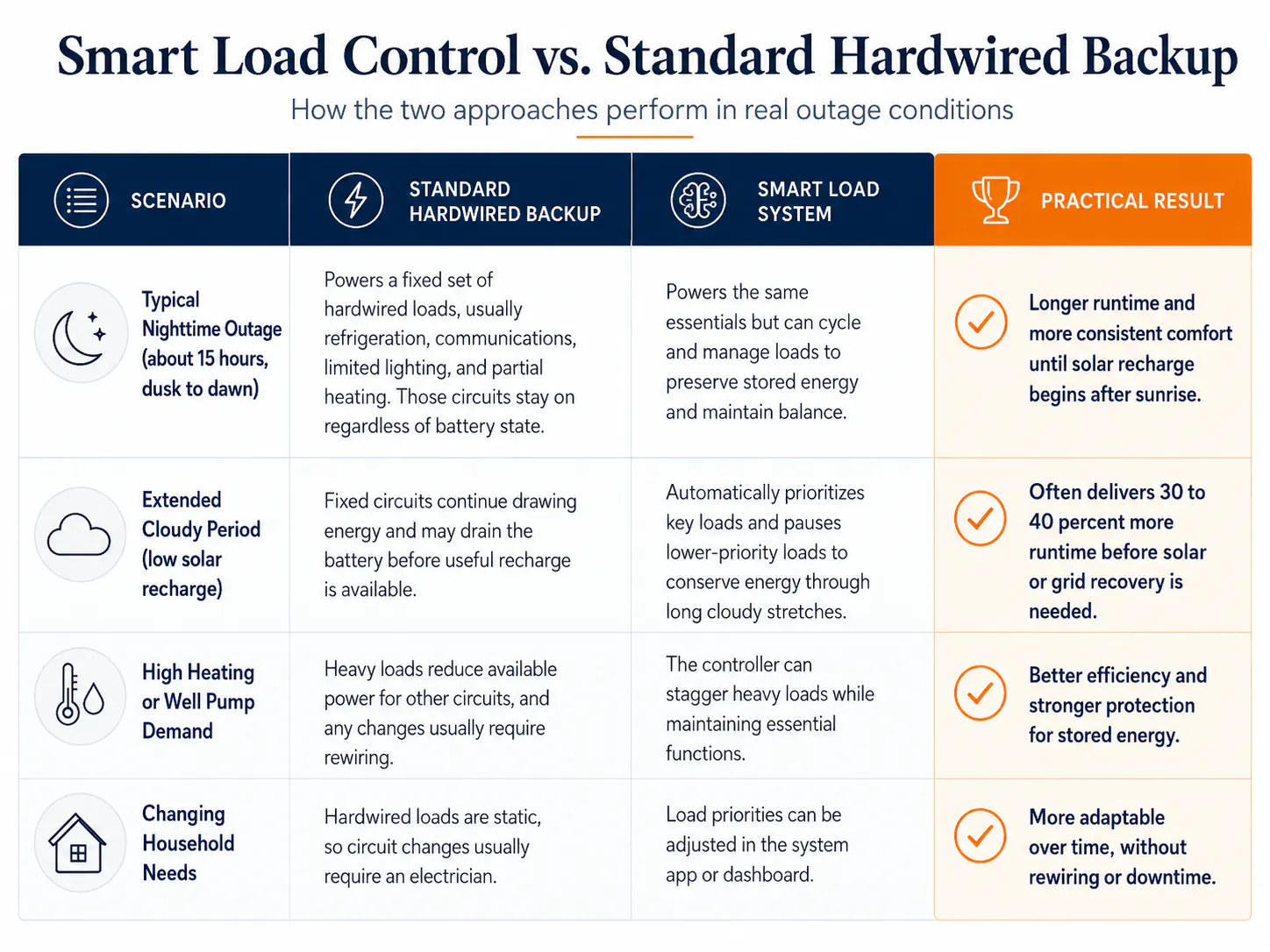
A traditional protected-load panel is fixed. The circuits selected at installation are the circuits that receive backup power. A smart load system gives the homeowner and installer more control over priorities, especially when the system includes solar, battery storage, and generator integration.
For many Puget Sound and Western Washington homes, the decision comes down to the loads. If the backup plan is simple and focused, smart load control may not be necessary. If the home has larger loads, changing priorities, longer outage concerns, or a hybrid system with a generator, smart load control may be worth considering.
When Solar, Batteries, and Generators Belong Together
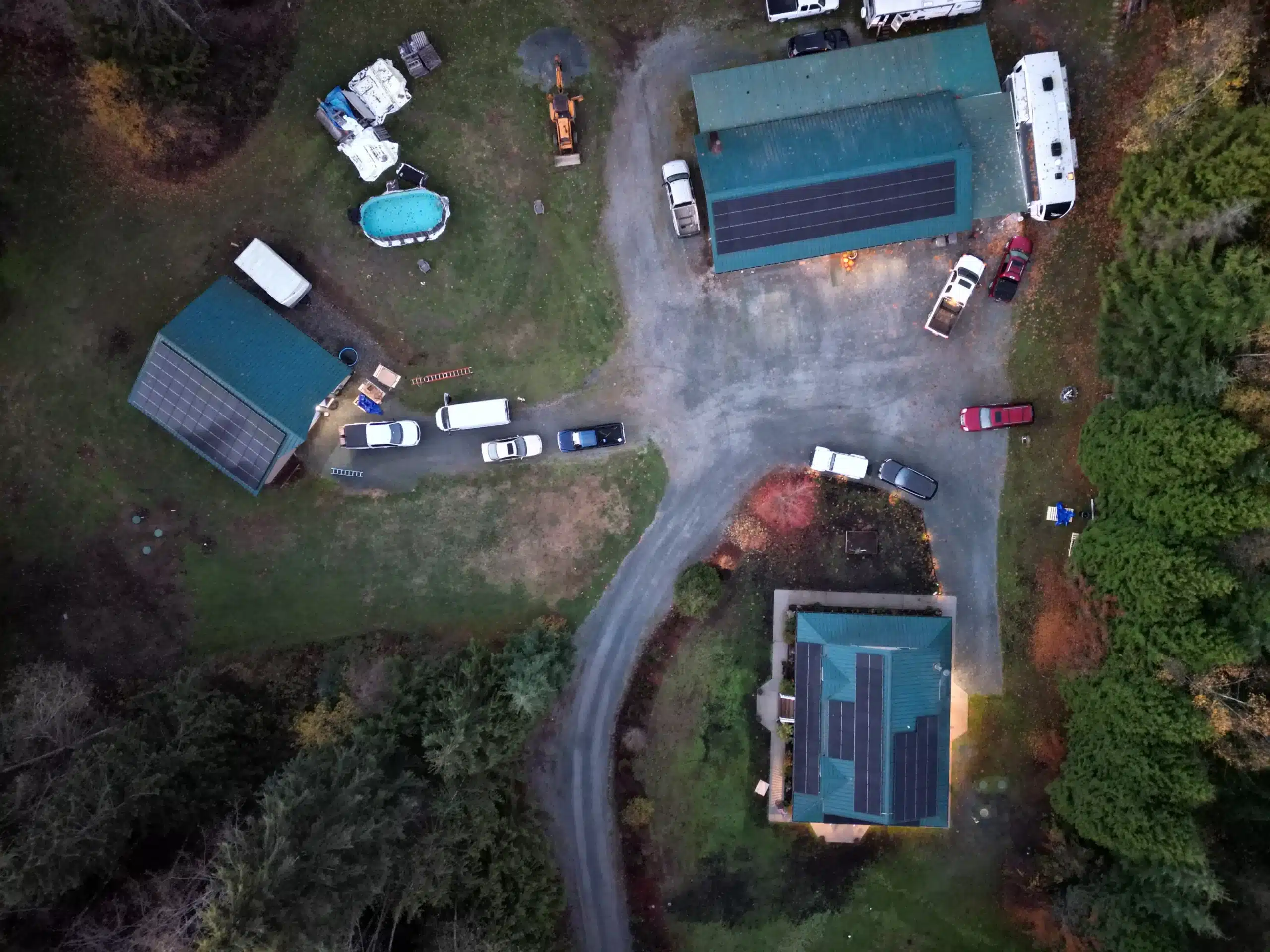
For most homes, the first design decision is how much of the house needs backup power. A solar, battery, and generator system usually enters the conversation when the homeowner wants broader whole-home coverage, longer outage protection, or a backup to the backup.
That can matter in the Puget Sound area. A home in Seattle or Bellevue may only need a focused battery system for lights, internet, refrigeration, and furnace controls. A rural Pierce County home, a coastal property near Port Townsend, a wooded property near Issaquah, or a farm outside Olympia may need more. Well pumps, septic systems, heat pumps, freezers, outbuildings, animal care, security gates, and longer restoration times can change the design.
In that kind of system, each piece has a role. The battery provides quiet, automatic backup when the grid goes down. Solar helps recharge the battery when weather and daylight allow. The generator is there for longer outages, heavier loads, or stretches of winter weather when solar production is limited.
A generator should not be treated as a replacement for careful battery design. It is added when the property needs more staying power than batteries and solar can provide on their own. For Puget Sound homeowners who want whole-home backup or more protection during multi-day outages, a hybrid solar, battery, and generator system can provide a practical second layer of resilience.
Understand system tradeoffs: why a generator alone may not be enough
Bringing the Backup Plan Together
By the time equipment is selected, the homeowner should have a clear picture of what the system is expected to do. Which loads will stay powered, which ones may be managed, how winter solar production may affect runtime, and whether a generator belongs in the design should all be understood before installation begins.
For some Puget Sound homeowners, that may mean a focused partial-backup system that keeps the essentials powered and preserves battery runtime. For others, especially rural, coastal, farm, or foothill properties within battery backup across Western Washington, it may mean whole-home backup with solar, battery storage, smart load control, and generator support.
The software side of the system matters as well. A good monitoring app should help the homeowner see battery status, solar production, energy use, and, when available, circuit-level load activity. That visibility makes the system easier to understand during everyday use and more useful when the grid is down.
The right backup system should not leave the homeowner guessing. The loads are identified, the priorities are clear, and the monitoring app shows how the system is performing. That is what separates a battery installation from a backup power system designed for the way the home functions.
Before comparing proposals, homeowners should ask a few specific questions about how the system will perform in their home.
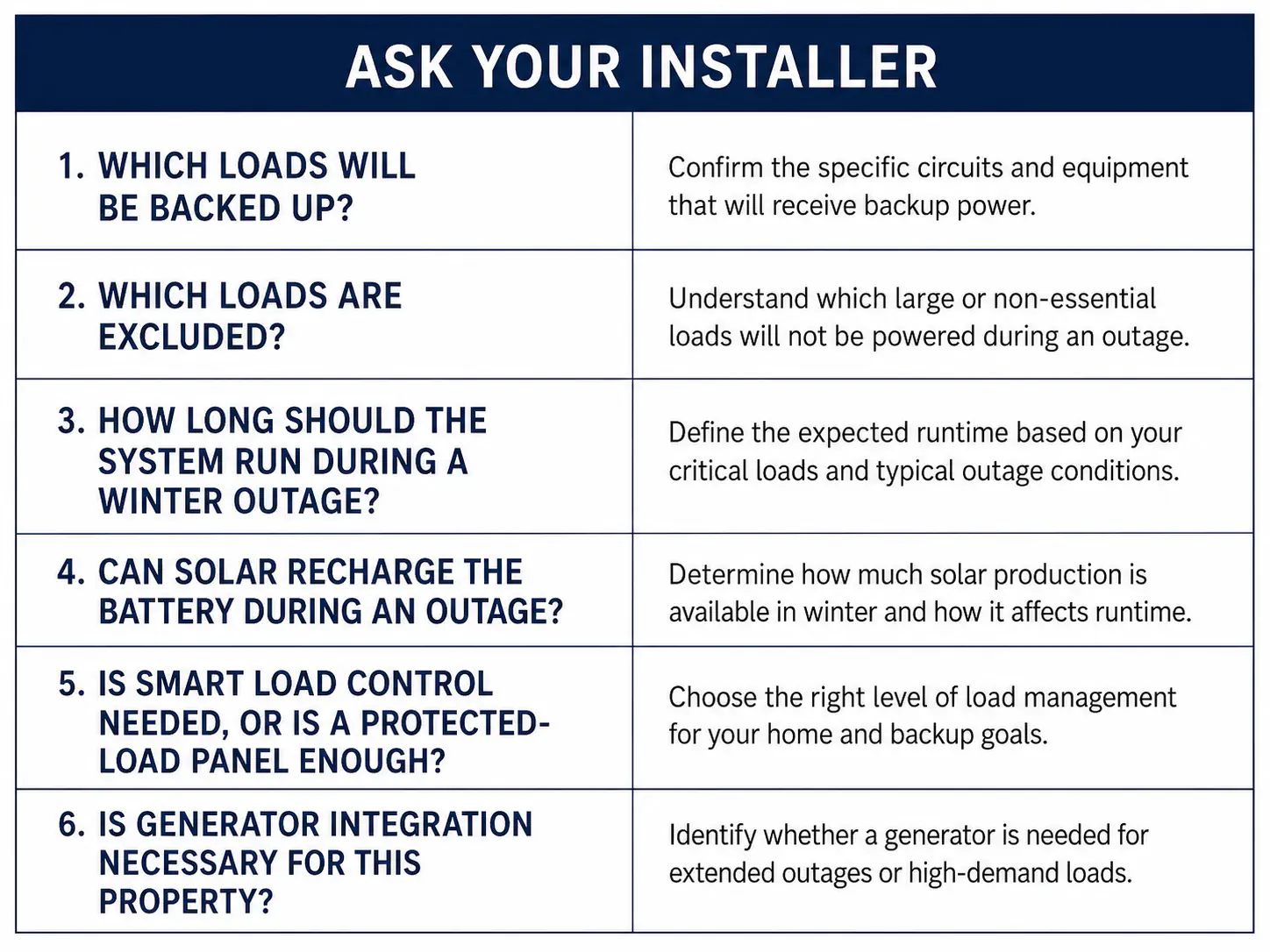
Before choosing a battery size, start with a load-based design conversation. Clean Energy Innovators designs solar, battery, smart load, and generator systems around how each Puget Sound home actually uses power during an outage, not around a one-size-fits-all equipment package.
Learn more: battery-first backup systems in the Pacific Northwest
FAQs
What is the difference between partial backup and whole-home backup?
Partial backup powers selected circuits during an outage, such as refrigeration, lighting, internet, furnace controls, medical equipment, sump pumps, or key outlets. Whole-home backup is designed to support more of the home or property, but it usually requires more battery capacity, more electrical planning, and careful load management. For many Puget Sound homes, partial backup provides the right balance of runtime, reliability, and cost. Whole-home backup may make more sense for rural properties, coastal homes, farms, foothill homes, or houses with wells, septic systems, larger heating loads, or outbuildings.
How do I know what my battery backup system should power?
Start with the loads that matter most during an outage. These usually include refrigeration, internet, lighting, garage access, furnace controls, medical equipment, sump pumps, and well or septic equipment if applicable. Then decide which loads would be helpful but not essential, such as home office equipment, selected kitchen outlets, security systems, or an extra freezer. Larger loads, such as heat pumps, EV charging, electric water heaters, shop circuits, or barn equipment, should be reviewed carefully before they are included in the backup plan.
Do I need smart load control with a home battery system?
Not every home needs smart load control. A simpler protected-load panel may work well when the goal is to power a clear group of essential circuits. Smart load control becomes more useful when the home has larger or variable loads, such as a heat pump, well pump, electric water heater, EV charging, shop circuits, barn circuits, or security gates. It can also help when the homeowner wants more flexibility, circuit-level visibility, or a hybrid system that includes solar, battery storage, and generator integration.
Can solar panels recharge a battery during an outage in Western Washington?
Yes, solar panels can help recharge a battery during an outage when the system is designed to operate that way. In Western Washington, solar production varies significantly by season. Winter storms, short days, cloud cover, and shade can limit how much solar energy is available during the same months when outages are more likely. That is why battery systems in the Puget Sound area should be designed around realistic winter conditions, not just ideal summer production.
When does it make sense to add a generator to a solar and battery system?
A generator can make sense when the homeowner wants whole-home backup, longer outage protection, or a second layer of backup beyond solar and batteries. This is often worth considering for rural homes, coastal properties, farms, homes near the Cascade foothills, or properties with wells, septic systems, larger heating loads, outbuildings, animal-care needs, or longer restoration times. In a well-designed hybrid system, the generator does not replace the battery. It supports the system during longer outages, heavier loads, or extended periods when solar production is limited.