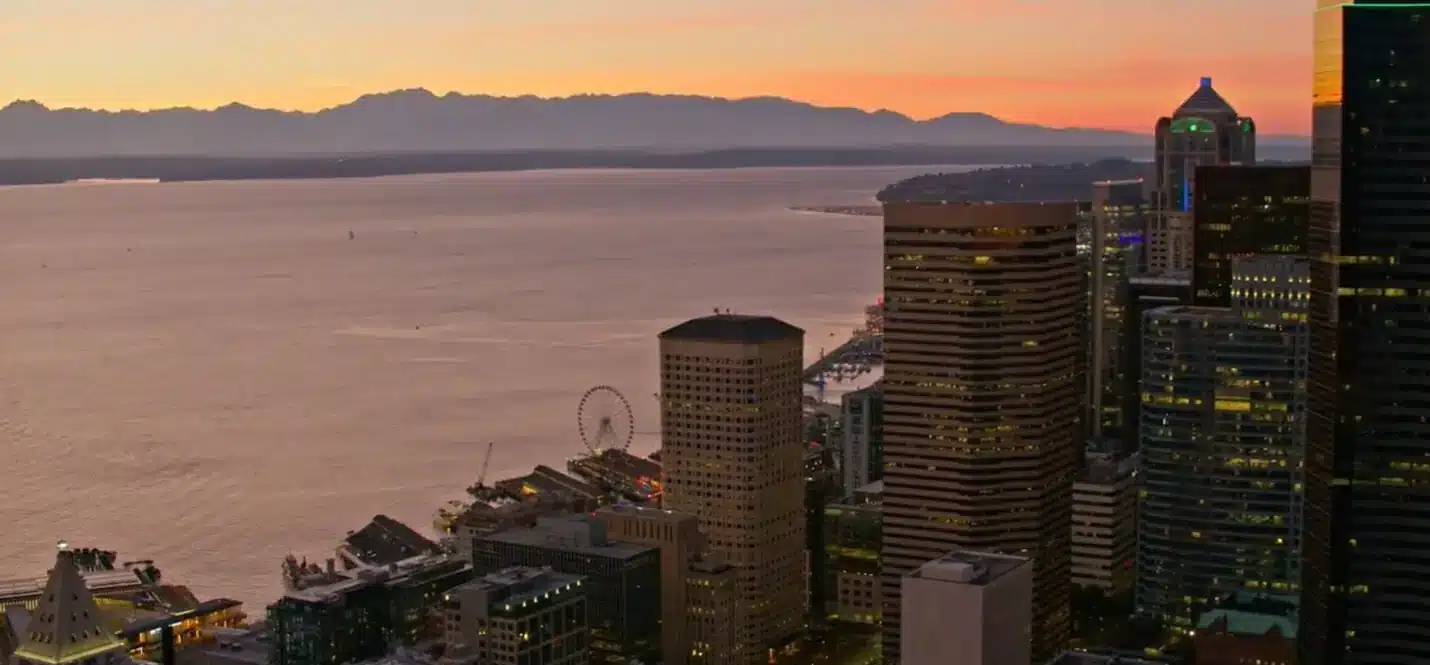
Many Seattle neighborhoods developed during the 1960s and 1970s installed underground electrical cables instead of overhead power lines. Several of these areas have experienced outages tied to aging underground infrastructure.
Check the list below to see if your neighborhood is included.
Madison Park Meadowbrook
View Ridge Morgan Junction
Brace Point / Endolyne Sand Point / Hawthorne Hills
Magnolia Wedgwood
Queen Anne Matthews Beach
Pinehurst Laurelhurst
Hurstwood
If your neighborhood appears on this list, you may have already experienced unexpected power outages or brief interruptions in electrical service even when weather conditions seemed calm.
Many of these communities were developed during the same period when underground utilities became popular in residential neighborhoods. Electrical cables were often installed directly in soil rather than inside protective conduit. At the time this approach helped create cleaner looking neighborhoods without overhead power lines.
Today many of those underground cables are approaching fifty years of age.
Electrical insulation used during that era was typically designed to last around forty to fifty years. As the insulation deteriorates over time, underground cables can begin to fail and cause power outages.
Seattle City Light has begun replacing aging underground cables in several neighborhoods, but these projects take time because replacing buried electrical infrastructure requires excavation and reconstruction beneath city streets.
Understanding how these underground systems were built helps explain why some Seattle neighborhoods are now experiencing more frequent outages.
The Direct Buried Cable System Used in Many Seattle Neighborhoods
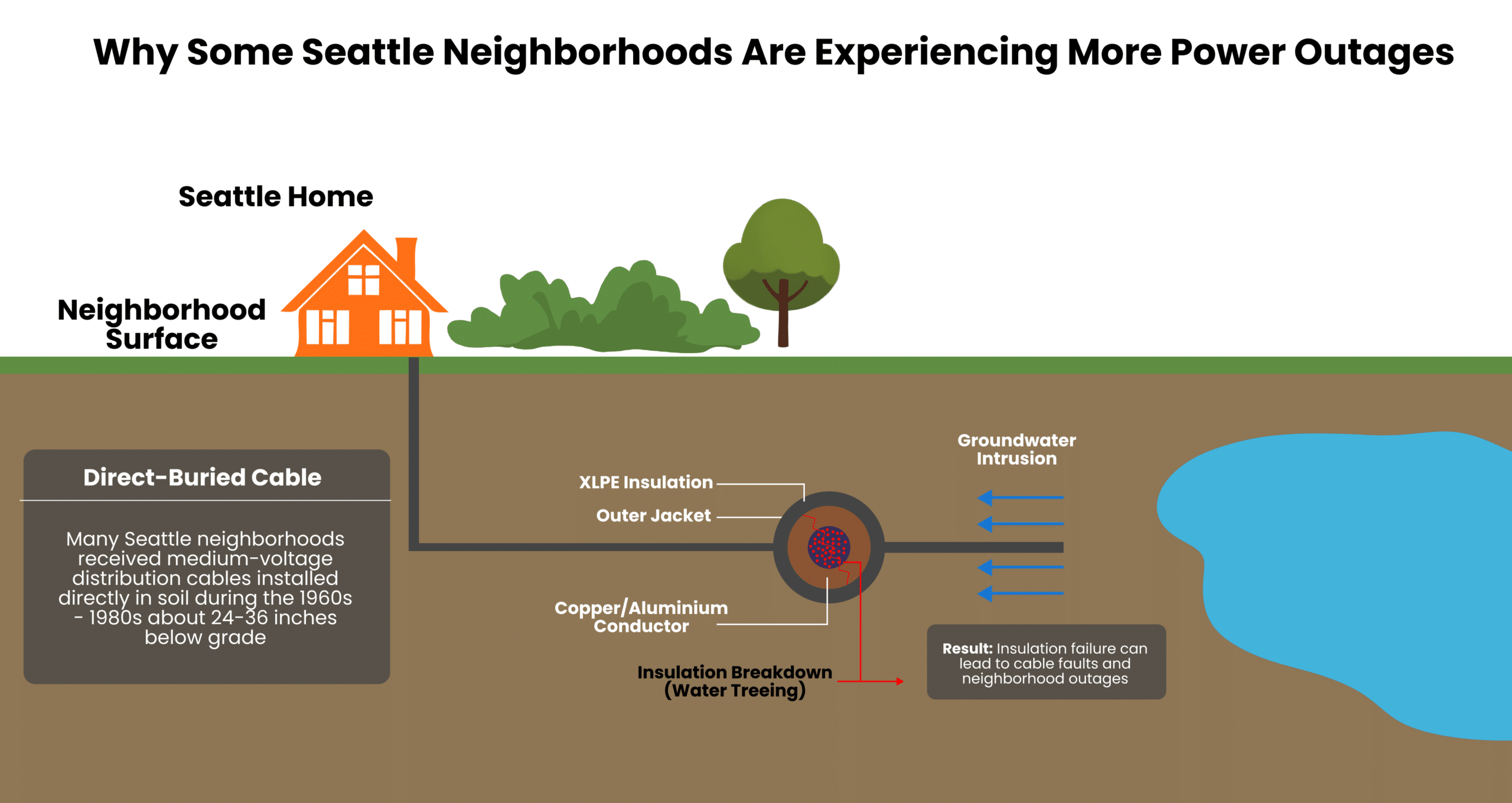
During the development boom of the 1960s and 1970s, utilities commonly installed underground power cables directly into soil rather than inside protective conduit. This installation method was known as direct burial.
At the time it was considered an efficient solution. Construction costs were lower and installation was faster. The insulation materials used on electrical cables were believed to be durable enough for decades of service.
Over time engineers learned that underground moisture could slowly affect the insulation surrounding electrical conductors.
The process is known as water treeing.
Moisture penetrates tiny imperfections in the insulation and microscopic cracks begin forming under electrical stress. Over many years those cracks spread until the cable eventually fails and electricity shorts to ground.
Seattle’s climate accelerates the problem. Rainfall, groundwater, and clay soils create damp underground conditions that allow moisture to reach the insulation layer more easily.
For decades the cables function normally. Then failures begin to appear as the insulation weakens.
Madison Park and Recent Power Outages
Madison Park has experienced frequent outages tied to aging underground infrastructure. The neighborhood’s electrical system dates back to the same period when direct buried cables were commonly installed.
Many of these cables are now between 45-50 years old. That age places them squarely within the stage when insulation failure becomes more likely.
Seattle City Light has confirmed that outages in Madison Park are consistent with aging underground cable infrastructure serving the neighborhood.
Complicating the issue is a flaw discovered in some older insulation materials that reduced expected lifespan. Once several cables begin reaching failure conditions, outages can occur more frequently until replacement work is completed.
Other Seattle Neighborhoods With Similar Infrastructure
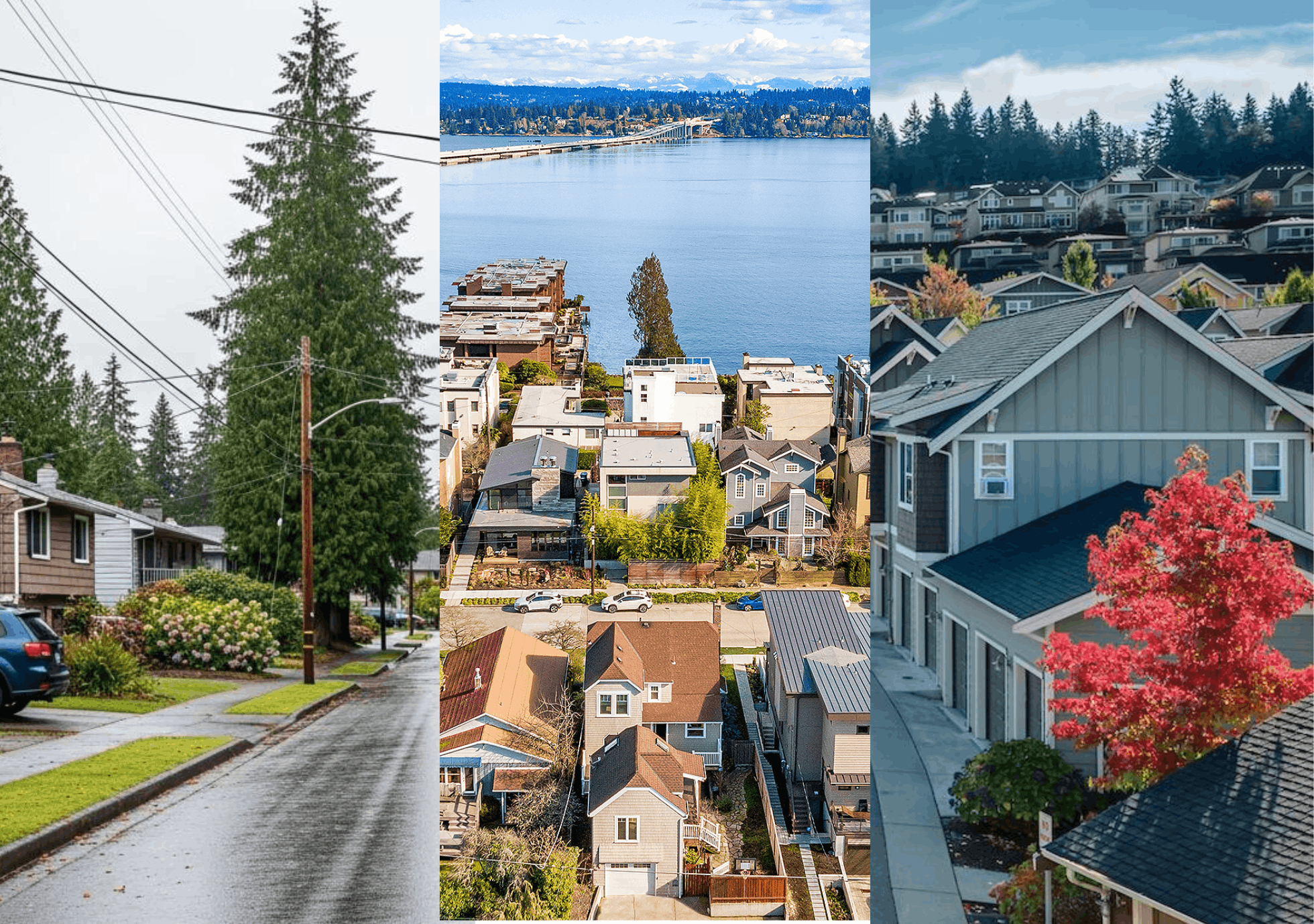
Madison Park is not the only neighborhood dealing with aging underground electrical systems.
Several areas built during the same development era share similar infrastructure. View Ridge recently completed a cable replacement project. Construction work is underway in the Brace Point and Endolyne areas of West Seattle. Hurstwood near Burien is also seeing underground cable replacement.
Future projects are planned for Magnolia and Queen Anne. Pinehurst is currently undergoing testing to determine replacement needs.
Some nearby neighborhoods such as Meadowbrook, Wedgwood, Matthews Beach, and areas around Sand Point were developed during the same period and may contain similar underground electrical systems.
Each neighborhood has a different timeline depending on engineering. The reality is that full replacement could take 20 to 30 years after a plan is made.
Replacing Underground Electrical Infrastructure Takes Time
Replacing underground power cables is much more complicated than repairing overhead lines.
Crews must excavate streets, install conduit systems, pull replacement cables, and rebuild underground vault connections that distribute power throughout the neighborhood.
Seattle City Light maintains roughly 590 miles of underground cable throughout the city. Approximately 330 miles of that system consists of older direct buried cable installed during the 1960s and 1970s.
Because of the scale of this infrastructure, replacement work is expected to unfold gradually over the next fifteen to twenty plus years.
For neighborhoods currently experiencing outages, the timeline can feel long. Large infrastructure projects require detailed engineering, permitting, and construction planning before work begins.
What This Means for Homeowners
Residents in affected neighborhoods, know that outages can be frustrating and unpredictable. But the underlying issue is really about aging infrastructure.
Electrical systems installed half a century ago are reaching the point where replacement becomes necessary. Cities across the United States are encountering similar challenges as underground cable networks built during the mid twentieth century age out of service.
While utilities work through long term replacement programs, some homeowners are beginning to think more carefully about resilience during outages.
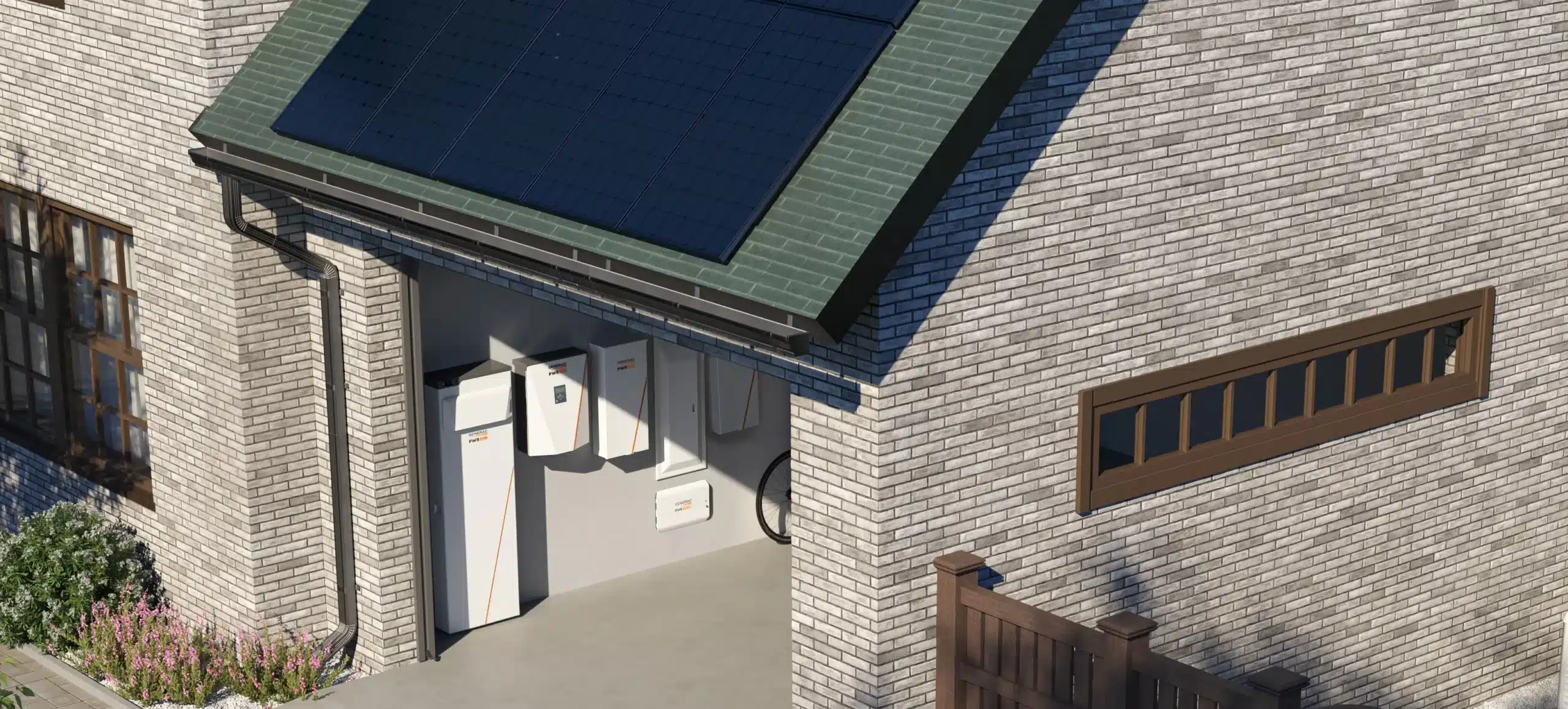
Backup power systems such as home batteries or generators can help households maintain electricity for essential systems when outages occur. But, in dense urban neighborhoods, generators present noise and pollution problems—Seattleites are sensitive to this.
Battery backup systems do not replace aging infrastructure, but they can provide an additional layer of reliability while utilities upgrade older electrical networks.
Frequently Asked Questions About Seattle Power Outages
1) Why are some Seattle neighborhoods losing power more often?
Many outages are linked to underground electrical cables installed during the 1960s and 1970s. These cables are reaching the end of their expected lifespan, which can lead to insulation failure and electrical shorts.
2) What is direct buried electrical cable?
Direct buried cable is an underground power line installed directly into soil instead of inside protective conduit. Over time moisture can penetrate the insulation surrounding the cable and contribute to failure.
3) Why does Seattle’s climate affect underground power cables?
Seattle’s wet climate keeps underground soil conditions damp. Moisture can slowly penetrate cable insulation and accelerate deterioration over decades.
4) How long does it take to replace underground electrical systems?
Replacing underground cables requires excavation, installation of conduit, and rebuilding underground vault connections. Larger projects can take several years to complete.
5) Which Seattle neighborhoods may have similar infrastructure?
Neighborhoods developed during the 1960s and 1970s with underground utilities may share similar cable systems. Areas mentioned in infrastructure planning include Madison Park, Magnolia, Queen Anne, Pinehurst, and parts of northeast Seattle.
Sources
Seattle City Light
Seattle Underground Cable Replacement Program
https://www.seattle.gov/city-light/in-the-community/current-projects/underground-cable-replacement
Seattle City Light
View and Report Power Outages
https://www.seattle.gov/city-light/outages
Seattle City Light
Electrical Infrastructure and Reliability Information
https://www.seattle.gov/city-light
Seattle City Light
Underground Cable Replacement Program Overview
https://recovery.seattle.gov/city-light/in-the-community/current-projects/underground-cable-replacement